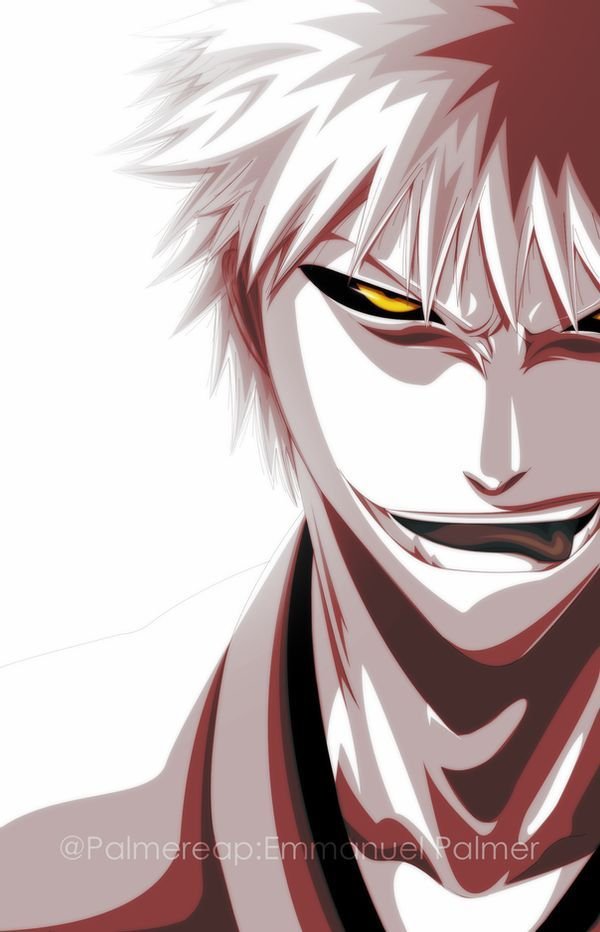
The True Nature and Identity of Ichigo's Inner Hollow Revealed
Few figures in manga and anime embody the struggle of identity and power quite like Ichigo Kurosaki, and at the heart of his tumultuous journey lies a force as enigmatic as it is destructive: his Inner Hollow. It’s a primal scream, a relentless mockery, and ultimately, a wellspring of unfathomable power. But what exactly is this entity, where did it come from, and how did Ichigo tame a beast that threatened to consume him entirely?
This isn't just about a power-up; it's a story of psychological warfare, self-acceptance, and the profound realization that true strength often means integrating your darkest parts, not suppressing them. Let's peel back the layers of Ichigo's soul and uncover the truth behind his Inner Hollow.
At a Glance: Understanding Ichigo's Inner Hollow
- Its True Name: Ogihci Shirosaki (often called White Ichigo or Shiro by fans).
- Origins: Inherited from his mother, Masaki Kurosaki, who absorbed a Hollow years before Ichigo's birth.
- Nature: Represents Ichigo's purest fighting instincts, fused with his Shinigami and Hollow powers. It's his true Zanpakutō spirit.
- Early Manifestations: Uncontrolled bursts of power, instinctual defense mechanisms triggered by near-death experiences.
- Achieving Control: Through a life-or-death battle in his inner world against its manifestation, proving his willpower and accepting it as part of himself.
- Impact: Grants Ichigo access to Hollowfication (mask), significantly boosting his abilities and providing access to Cero.
- Evolution: From antagonistic foe to synergistic ally, eventually fusing completely with his Quincy powers for ultimate strength.
Decoding the Inner Shadow: Who (or What) is Ogihci Shirosaki?
The first step in understanding Ichigo's Inner Hollow is giving it a name, and in the intricate lore of Bleach, this entity isn't merely a nameless beast. It is known as Ogihci Shirosaki. The name itself offers a subtle clue to its nature: "Ogihci" is "Ichigo" spelled backward, a stark reflection, while "Shirosaki" plays on "white" (shiro) in contrast to "black" (kuro), perfectly mirroring its pale, spectral appearance and opposing Ichigo's family name, Kurosaki. It's a distorted echo, a mirror image that is both deeply familiar and utterly alien.
Its origins stretch back years before Ichigo himself was even conceived, rooted deeply within his family lineage. The most likely source dates to his mother, Masaki Kurosaki, a powerful Quincy. During a fateful encounter, Masaki absorbed a Hollow similar to Ogihci. This demonic entity, rather than destroying her, became a part of her, and she subsequently passed it on to Ichigo through their unique genetic inheritance. This means Ichigo wasn't just born with his father Isshin Shiba's Shinigami powers, or his mother's Quincy abilities; he inherited a formidable Hollow as well, making him a truly unprecedented hybrid.
This isn't just some random spirit; the Inner Hollow, as Ichigo later learns, is in fact his true Zanpakutō spirit. Confused? You’re not alone. For much of his journey, Ichigo believed the "Old Man Zangetsu" was his Zanpakutō. The revelation that the Inner Hollow, Ogihci, was the actual manifestation of his Zanpakutō spirit, fused with his Shinigami and Hollow powers, while Old Man Zangetsu represented his latent Quincy abilities, profoundly reshaped his understanding of his own power and identity. This entity, therefore, isn't just a parasite; it's a fundamental component of his very being, representing his purest, most primal fighting instincts, unburdened by reason or fear.
The Unveiling: Early Manifestations and the Growing Threat
For a long time, Ichigo was unaware of the lurking entity within him. Its presence was subtle at first, manifesting only in moments of extreme peril, when Ichigo's life hung by a thread. These weren't conscious decisions or strategic maneuvers; they were raw, instinctual defense mechanisms.
We saw glimpses of this power during Ichigo’s grueling training with Kisuke Urahara, where he nearly underwent full Hollowfication. Later, in the heat of battle in the Soul Society, a fragment of a Hollow mask briefly materialized, offering a momentary defensive boost against overwhelming odds. Against the formidable Kenpachi Zaraki, a power surge, undeniably more than just Shinigami strength, hinted at something darker residing within.
The true, terrifying unveiling, however, came during his desperate fight against Byakuya Kuchiki. Here, the Inner Hollow took over completely, albeit briefly, revealing its distinct white form, its mocking voice, and its brutal, unthinking power. These initial appearances were fleeting, a double-edged sword that saved Ichigo's life but left him disturbed and without any memory of the event.
As the narrative progressed into the Arrancar Arc, the Inner Hollow transformed from a sporadic savior into a persistent, psychological tormentor. Its mocking voice became a constant presence in Ichigo's mind, frequently attempting to seize control. This internal struggle significantly hindered Ichigo's fighting ability. He fought not just his external enemies, but also the deep-seated fear of unleashing the monster within, a fear that ironically prevented him from accessing his full potential. This period marked a critical turning point: the Hollow was no longer just a defensive reflex; it was a pronounced, active threat that Ichigo knew he had to confront head-on.
Confronting the King: Training with the Visored and Mastering the Beast Within
The escalating threat of his Inner Hollow, particularly after it indirectly attacked Orihime Inoue during an uncontrolled surge, pushed Ichigo to seek a radical solution. He found it in the enigmatic Visored, a group of rogue Shinigami who had not only Hollowfied but had also successfully mastered the mechanics of Hollowfication, controlling their inner demons and donning Hollow masks at will. Led by the ever-grinning Shinji Hirako, the enigmatic Visored offered Ichigo a dangerous path to control.
Their training was brutal and unconventional. It forced Ichigo into a direct, life-or-death confrontation within his own subconscious "inner world." Here, the Inner Hollow manifested physically, appearing as a pure white version of Ichigo himself, clad in a black shihakushō but wielding a white Zangetsu. This entity, which fans often refer to as "White Ichigo" or "Shiro," made a shocking claim: it was the true Zangetsu, the purest embodiment of Ichigo's fighting instincts. The battle was not just for control, but for identity.
Simultaneously, in the physical world, Ichigo’s body underwent a terrifying, full Hollow transformation. His skin became pale, his eyes black, and a monstrous mask formed, signifying the Hollow's attempt to completely consume him. It was a perilous tightrope walk, and without the immense Kido capabilities of Hachigen Ushōda, who restrained the transformation with Bakudō #75, Gochūtekkan, Ichigo would have been lost.
Ichigo's path to control wasn't about suppression; it was about assertion and acceptance. He achieved mastery by demonstrating his indomitable willpower, unequivocally proving himself the "king" of his own soul. In a pivotal moment, he allowed the Inner Hollow to stab him, a symbolic act of vulnerability and trust. Then, using that connection, he grabbed the white Zangetsu, pulling it from the Hollow's grasp and turning it on the entity itself. This wasn't about destruction, but about integration. By accepting the Hollow's raw instinct and channeling it through his own will, Ichigo became its master. This hard-won victory granted him the ability to consciously summon his Hollow mask, a powerful new tool in his arsenal.
The Power Unleashed: Controlled Hollowfication and its Strategic Impact
Mastering Hollowfication wasn't just a personal victory; it was an absolute necessity for Ichigo to continue his journey and protect those he cared about. The power boost provided by his controlled Hollow mask was immense and multifaceted, proving essential in bridging the power gap against formidable Arrancar and Espada.
When Ichigo donned the mask, his already impressive speed, strength, and durability were multiplied significantly. His Getsuga Tenshō, the signature attack of Zangetsu, became exponentially more powerful, capable of tearing through defenses that once seemed impenetrable. Crucially, Hollowfication also granted him access to the Cero, a potent energy blast typically reserved for Hollows and Arrancar, which he could fire from his fingertips or, later, his sword. This new ability instantly made him a more versatile and dangerous opponent.
Beyond the sheer combat advantages, this mastery symbolized critical character development concerning balance and self-acceptance. Ichigo’s journey was a microcosm of coming to terms with the "darker" or more primal parts of oneself. By learning to integrate and control his raw, instinctual power, rather than rejecting or fearing it, he grew immeasurably as a character. This profound self-acceptance laid a crucial foundation for his understanding of his complex heritage and the true nature of his powers, setting the stage for even deeper revelations about Masaki Kurosaki's fateful encounter and the true nature of Zangetsu.
Initially, the duration of Ichigo's Hollow mask was severely limited, often lasting mere seconds. This meant he had to time its activation perfectly, using it in brief, decisive bursts to turn the tide of battle. It was a testament to his adaptability and growing strategic mind that he could make such fleeting power count.
Beyond the Mask: Distinguishing Controlled Hollowfication from the Full Transformation
While Ichigo's controlled Hollow mask became a signature element of his fighting style, it's crucial to distinguish it from the terrifying, towering Full Hollow form.
Ichigo first willingly used his controlled Hollow mask during his iconic rematch with Grimmjow Jaegerjaquez in Hueco Mundo. From then on, he strategically employed it against various opponents, gradually extending its duration as his control grew. The mask was a conscious choice, an augmentation that Ichigo summoned to boost his abilities, maintaining full awareness and control over his actions.
However, a far more primal and destructive manifestation erupted much later during his second, desperate battle against the Fourth Espada, Ulquiorra Cifer, in Las Noches (famously depicted in Bleach anime episodes 271-272). This was not the controlled Hollowfication; this was a terrifying, towering, horned, white-skinned Full Hollow form, often referred to by fans as his "Vasto Lorde" form due to its immense power and resemblance to a powerful Hollow class.
This transformation was triggered by a perfect storm of despair: Ichigo's perceived death at Ulquiorra's hand, combined with Orihime's desperate, heartbroken cries for help. In this state, Ichigo operated purely on brutal instinct, a destructive force unleashed solely to eliminate threats. He had zero control over his actions, speaking only in guttural roars and moving with savage, overwhelming power. Crucially, Ichigo retained absolutely no memory of this uncontrolled state, waking up horrified by the devastation he had wrought and the monstrous actions he had committed without his conscious will. This Full Hollow form represented the very nightmare he had trained with the Visored to avoid: a total loss of self to the inner beast.
An Evolving Alliance: From Submission to Synergy
The relationship between Ichigo and his Inner Hollow was never static. It began as intensely antagonistic, a battle for dominance where Ichigo forced the Hollow into submission to gain the power of the mask. Yet, this dynamic eventually evolved from one of reluctant control towards a profound cooperation, marking a significant psychological and spiritual shift for Ichigo.
The catalyst for this evolution came with the complete revelation of the true nature of Zangetsu during the climactic battles against Yhwach. Ichigo finally learned that "Old Man Zangetsu" was, in fact, the manifestation of his Quincy powers, while his Inner Hollow was the true manifestation of his Shinigami and Hollow abilities, all woven together. This wasn't merely a Hollow; it was the raw, unrestrained essence of his sword, his very soul.
This newfound understanding irrevocably shifted Ichigo’s perspective. No longer viewing the Inner Hollow as a separate, purely evil entity to be suppressed, he began to see it as an intrinsic and vital part of himself, a fundamental source of his strength. This acceptance paved the way for a powerful, synergistic fusion where all aspects of his complex heritage – Shinigami, Hollow, and Quincy – began to work together seamlessly under Ichigo’s command.
In later battles, particularly against the overwhelming might of the Quincy Empire, Ichigo's powers manifested in a way that truly integrated all his disparate elements. His Hollow and Quincy aspects no longer conflicted but amplified each other, creating a unique and unprecedented power. This final stage of development wasn't about conquering one part of himself; it was about complete self-acceptance and the harmonious mastery of his complex nature, culminating in a form where his inner Hollow's influence was no longer a mask but an integrated part of his spiritual energy, enhancing his attacks and form. For a deep dive into Ichigo the Hollow, this evolution is central. It showcased that true power often comes from unifying seemingly opposing forces within.
Common Questions and Lingering Shadows
Ichigo's Inner Hollow saga is complex, leading to many questions. Let's tackle some common misconceptions.
Is Ichigo's Inner Hollow "evil"?
While its initial manifestations were brutal and its voice mocking, it's more accurate to describe the Inner Hollow as a representation of Ichigo's primal fighting instincts – raw, aggressive, and survival-driven. It's not inherently evil in the sense of conscious malice, but rather an amoral force focused solely on power and victory. It simply desires to be the "king" of Ichigo's inner world, to lead in battle. Its actions, especially in the Full Hollow form, appear destructive, but from its perspective, it's simply doing what's necessary to protect "its" body (Ichigo) and win the fight.
Is the Inner Hollow Zangetsu?
This is perhaps the most nuanced question. Yes, eventually, Ichigo learns that the Inner Hollow is indeed the true manifestation of his Zanpakutō spirit, fused with both his Shinigami and Hollow powers. For most of the series, Ichigo believed the "Old Man Zangetsu" (the trench-coat clad figure) was his Zanpakutō. However, it was revealed that Old Man Zangetsu was a manifestation of Ichigo's latent Quincy powers, suppressing his true Shinigami/Hollow power to protect him. The Inner Hollow was always the core of his Shinigami power, infused with the Hollow that originated from Masaki Kurosaki's fateful encounter. So, while Old Man Zangetsu was a part of Ichigo, the Inner Hollow was the actual spirit of his sword.
Could Ichigo have become a full-fledged Hollow permanently?
Absolutely. The moments when his body underwent full Hollow transformation, particularly during his training with the Visored and against Ulquiorra, were critical junctures where he teetered on the brink. Without external intervention (like Hachigen's Kido) or his own immense willpower, the Hollow could have completely consumed his soul, erasing his personality and turning him into a monstrous, mindless entity. The entire purpose of his training with the Visored was to prevent this very outcome, by allowing him to control, rather than be controlled by, this power. This emphasizes the constant tightrope walk he was on, especially given Ichigo's dormant Quincy abilities also playing a role in his unique physiology.
Embracing Your Inner Power: Lessons from Ichigo's Journey
Ichigo Kurosaki's tumultuous relationship with his Inner Hollow isn't just a fascinating plot point in a Shonen anime; it's a powerful metaphor for self-discovery and personal growth. His journey offers profound lessons applicable far beyond the battlefields of the Soul Society.
- Acceptance Over Suppression: Ichigo initially feared and rejected his Inner Hollow, seeing it as a monstrous anomaly. It was only when he accepted it as an undeniable, integral part of himself – a source of immense power, however primal – that he truly began to master it. This teaches us that suppressing our "darker" instincts, our fears, or our perceived flaws often makes them stronger and more dangerous. True control comes from acknowledging and integrating them into our whole self.
- Confrontation as a Path to Mastery: Ichigo didn't shy away from facing his Inner Hollow head-on in his inner world. This grueling, life-or-death confrontation was terrifying, but it was the only way to establish dominance and understanding. Similarly, in our own lives, confronting our inner demons, fears, or anxieties, rather than avoiding them, is often the necessary step towards gaining mastery and peace.
- The Interplay of Instinct and Will: The Inner Hollow represented pure instinct and raw power, while Ichigo embodied willpower, compassion, and intellect. His eventual mastery wasn't about eradicating the instinct but channeling it with his will. This highlights the importance of balancing our primal drives with our conscious choices. Instinct provides the fuel, but will provides the direction.
- True Strength is Integration: Ichigo's ultimate power didn't come from relying solely on his Shinigami, Hollow, or Quincy abilities in isolation. It came from understanding and integrating all these disparate, often conflicting, elements into a synergistic whole. This holistic approach to power, where every part of his being contributed to his strength, serves as a powerful reminder that our greatest strengths often emerge when we embrace the full spectrum of who we are, rather than trying to fit into a single, simplified mold.
Ichigo's Inner Hollow, Ogihci Shirosaki, is more than just a convenient power-up; it's a testament to the complex, multifaceted nature of power, identity, and the relentless journey of self-acceptance that defines a true hero. His story reminds us that sometimes, the most fearsome battles are fought within, and the greatest victories are won by embracing every part of ourselves.