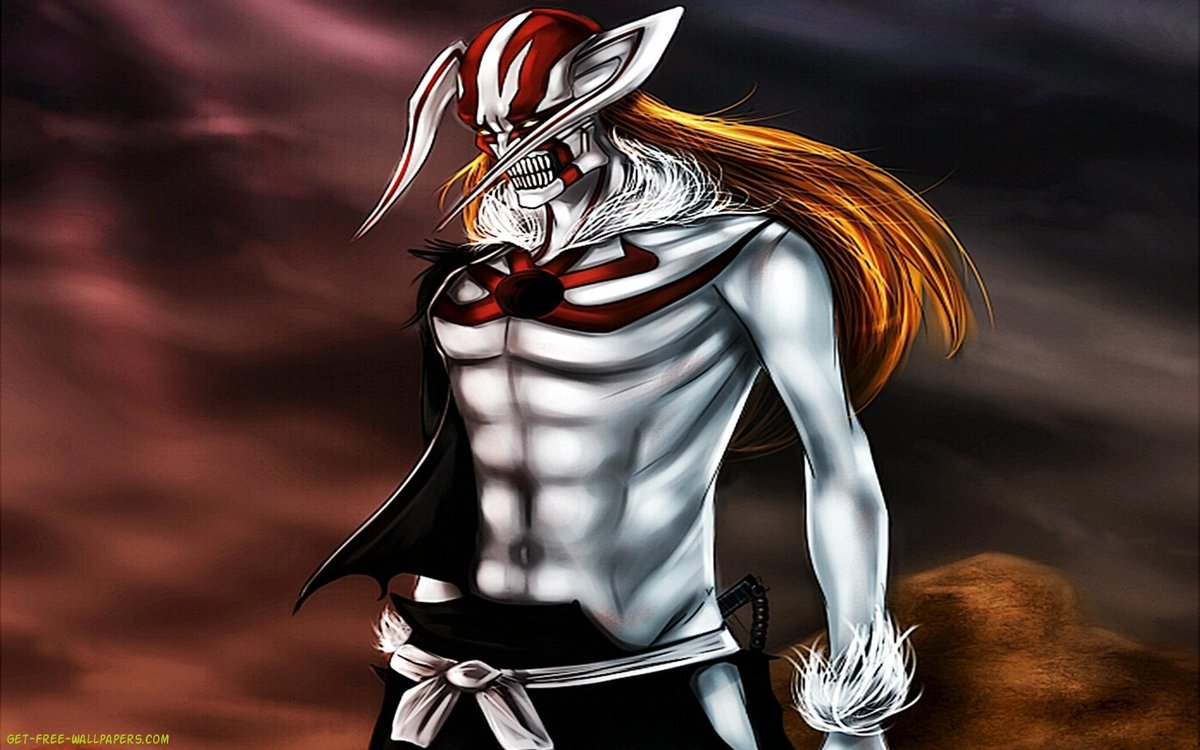
Few characters in anime embody the struggle for self-acceptance quite like Ichigo Kurosaki, especially when grappling with the profound psychological impact and inner conflict of Ichigo's Hollow. More than just a power-up, his journey to tame the monstrous entity residing within him was a battle for his very soul, shaping his identity, resolve, and understanding of what it truly means to be a hero. It wasn't about suppressing a demon, but integrating a fundamental, terrifying part of himself.
At a Glance: Ichigo's Battle for Inner Harmony
- Origin Story: Ichigo's Hollow powers weren't random; they stemmed from his mother, Masaki, who inherited an artificial Hollow, "White," after a fateful encounter. This lineage made the Hollow a core part of his very being.
- Early Alarms: The Hollow first manifested as an instinctual, uncontrolled defense mechanism, notably during his fight against Byakuya Kuchiki in Soul Society, hinting at a power that was both savior and threat.
- The Taming: To gain control, Ichigo underwent perilous training with the Visored, forcing a direct confrontation with his Inner Hollow (Shirosaki/White Ichigo) within his mind.
- Victory & Mastery: By asserting his will and accepting the Hollow as part of himself, Ichigo achieved "Controlled Hollowfication," allowing him to consciously summon his Hollow mask for significant power boosts.
- The Uncontrolled Beast: Distinct from the mask, his "Full Hollow" (Vasto Lorde) form was an uncontrolled, devastating transformation, unleashed only under extreme duress and devoid of his consciousness.
- True Understanding: Later revelations clarified that his Inner Hollow was, in fact, his true Zanpakutō spirit, fused with his Shinigami/Hollow powers, leading to a deeper, synergistic relationship rather than pure subjugation.
The Genesis of a Paradox: Inherited Power, Innate Threat
Imagine waking up to discover a part of your genetic makeup is a primal, bloodthirsty entity. That's Ichigo's reality. His Hollow powers aren't some external curse but a deeply ingrained inheritance, a testament to the extraordinary circumstances of his birth. His mother, Masaki Kurosaki, bore an artificial Hollow known as "White" after it attacked her and Isshin Shiba. Through Kisuke Urahara's intervention, Isshin's Shinigami powers contained White within Masaki. This complex blend of energies — Isshin's Soul Reaper, Masaki's Quincy, and the contained Hollow — became Ichigo's foundational inheritance.
This lineage meant that from birth, Ichigo carried a vast, untamed potential, but also an inherent paradox. His greatest power was intrinsically linked to a chaotic, destructive force. This wasn't merely a fight against an enemy; it was a struggle with himself, a battle for the very definition of his identity. How do you reconcile being a hero with harboring a monster?
Early Whispers: When the Monster First Stirred
The Hollow didn't announce its presence with a grand entrance. Instead, it emerged in whispers and flashes, often in moments of dire need, acting as a raw, instinctual defense. During Kisuke Urahara's intense "Shattered Shaft" training, and briefly against the monstrous Kenpachi Zaraki, there were hints of an abnormal, ferocious energy.
The most significant early manifestation came during the Soul Society Arc, in his desperate clash with Byakuya Kuchiki. Cornered, wounded, and facing overwhelming odds, a white mask spontaneously formed on Ichigo's face. His movements became savage, his power surged, and he briefly turned the tide against a captain-level Shinigami. This wasn't conscious control; it was a raw, unfiltered surge of power driven by a primal desire to protect and survive. For Ichigo, these moments were disorienting, terrifying, and left him with lingering questions about the source of such brutal strength. He knew it wasn't him, not entirely, but it certainly came from him.
The Brink: When the Hollow Became a Pronounced Threat
By the time the Arrancar Arc rolled around, the Hollow was no longer a sporadic burst of defense; it was an active, insidious threat. It began to actively seize control, manifesting as a maniacal grin and mocking voice in his head, directly interfering with his concentration and fighting ability. This wasn't just a physical vulnerability; it was a psychological torment.
Imagine a parasite in your mind, constantly undermining your confidence, mocking your weaknesses, and threatening to take over your body. The Hollow actively tried to force its way out, causing Ichigo immense pain and fear. This internal sabotage often hampered his performance in critical battles, turning potential victories into desperate struggles. The stakes escalated: mastering this power wasn't just about getting stronger; it was about preventing his own self from becoming his greatest enemy. He recognized this critical vulnerability, understanding that if he couldn't control this inner demon, it would eventually consume him entirely.
Confronting the Demon Within: The Visored Training
The path to control wasn't found in suppressing the Hollow, but in confronting it head-on. Ichigo, driven by desperation and a thirst for power to protect his friends, sought out the Visored – a group of rogue Shinigami who had mastered Hollowfication. Their method was brutal, dangerous, and deeply psychological.
Under Shinji Hirako's sardonic but effective guidance, Ichigo embarked on perilous training. This wasn't a sparring match; it was an internal war. While his consciousness was plunged into his "inner world" to battle his Hollow manifestation, his physical body in the real world underwent a complete, uncontrolled Hollow transformation. This rampaging, white-skinned monster had to be physically restrained by the other Visored, with Hachigen Ushōda using powerful Bakudō to keep it from annihilating them all. The sheer danger of this process highlighted the gravity of Ichigo's struggle; failure meant not just death, but potentially becoming the very monster he sought to control.
The Inner World Battle: King vs. Beast
Ichigo's inner world was a desolate, inverted cityscape, a reflection of his own turmoil. Here, he met his Inner Hollow, often called "White Ichigo" or "Shirosaki" – a pale, grinning doppelgänger wielding a white Zangetsu. This entity wasn't just a brute; it was cunning, articulate, and terrifyingly insightful. It claimed to be the true Zangetsu, Ichigo's purest fighting instinct, unburdened by conscience or fear. It mocked Ichigo's hesitation, his desire to protect, and his emotional attachments, seeing them as weaknesses.
The battle was brutal, a fight for dominance over his own soul. The Inner Hollow challenged Ichigo's very identity, claiming that Ichigo's desire for power was inherently selfish and destructive, just like itself. But Ichigo, through sheer indomitable willpower, refused to yield. He understood, instinctively, that this wasn't an external enemy to be slain, but a part of him that needed to be acknowledged and accepted.
The turning point was Ichigo's declaration of himself as the "king" of his inner world. He allowed the Hollow to stab him, a symbolic act of acceptance rather than denial. Then, grabbing the white Zangetsu, he turned it on the Hollow, asserting his mastery. This wasn't about destroying the Hollow, but about forcing it to yield to his will, to serve as his power rather than control him. This victory wasn't just physical; it was a profound psychological breakthrough, a moment of self-actualization where Ichigo finally embraced the darker, more primal aspects of his power without succumbing to them. This was the moment he began to truly understand All about Ichigo the Hollow, not just as a power, but as a part of himself.
Mastering the Mask: Controlled Hollowfication
The fruit of this harrowing inner battle was "Controlled Hollowfication." Ichigo could now consciously summon his Hollow mask, a stark white skull-like face that signified his temporary fusion with his inner demon. This power-up was transformative. With the mask, Ichigo's speed, strength, and durability skyrocketed. He gained access to Cero, a devastating energy blast previously exclusive to Hollows and Arrancar, showcasing the sheer destructive potential he now wielded.
Initially, the mask's duration was painfully limited, often lasting only around 11 seconds. This introduced a new layer of psychological pressure: Ichigo had to strategize, knowing he had a fleeting window of immense power. It was a race against time, forcing him to be decisive and efficient. This temporary boost was absolutely crucial for him to stand a chance against formidable Arrancar and Espada like Grimmjow Jaegerjaquez and Ulquiorra Cifer, bridging a power gap that would otherwise be insurmountable. His first intentional use of the mask in battle, against Grimmjow in Hueco Mundo, marked a pivotal moment in his mastery and confidence.
The psychological impact of using the mask was complex. On one hand, it was exhilarating, offering a surge of power that allowed him to protect. On the other, it was a constant reminder of the monster he contained, a fine line he walked between hero and berserker.
The Abyss Unleashed: The Full Hollow Transformation
Distinct from the controlled mask was Ichigo's "Full Hollow" or "Vasto Lorde" form. This wasn't a conscious choice; it was a terrifying, instinctual eruption of power born from ultimate despair and the anguish of those he cared for. This form made its dramatic debut during his second fight with Ulquiorra Cifer, when Ulquiorra seemingly killed Ichigo. Orihime Inoue's desperate, anguished pleas triggered a catastrophic transformation.
Ichigo's body regenerated and morphed into a towering, horned, white-skinned Hollow, reminiscent of a Vasto Lorde-class Arrancar. In this state, he demonstrated overwhelming power, high-speed regeneration, and Ceros potent enough to utterly dominate Ulquiorra's formidable Segunda Etapa. Yet, this power came at a terrible cost: Ichigo had zero control. He acted purely on instinct, a vessel for raw, destructive power, harming friend and foe alike in his blind fury. Crucially, he retained no memory of the event, severing him from the actions performed by this uncontrollable entity.
This form represented Ichigo's ultimate fear realized: losing himself completely to the Hollow. It was a traumatic event, reinforcing the psychological tightrope he walked. Even after regaining his consciousness, the knowledge that such a beast resided within him, capable of such devastation without his consent, must have weighed heavily on his mind. It highlighted the ongoing tension between his identity and his inherited power.
Evolution of a Relationship: From Antagonism to Synergy
Ichigo's relationship with his Hollow wasn't static; it evolved dramatically throughout his journey. What began as a purely antagonistic struggle gradually shifted toward a fragile understanding, then to a profound synergy.
The true nature of his powers was finally revealed during the Thousand-Year Blood War arc. Ichigo learned that the stern, elderly entity he'd known as "Old Man Zangetsu" was, in fact, the manifestation of his Quincy powers, which had suppressed his true Shinigami and Hollow abilities out of a desire to protect him. His Inner Hollow, the maniacal white doppelgänger, was his true Zanpakutō spirit, fused with his Shinigami and Hollow energies.
This revelation was monumental. It meant the entity he'd fought, feared, and subjugated wasn't a separate demon, but the core of his very being, his true partner in battle. This understanding, combined with Ichigo's unwavering resolve and his acceptance of all parts of himself, led to a more synergistic fusion of his powers. The Hollow, now fully acknowledged and integrated, no longer resisted but actively cooperated, serving its "King."
In the final confrontation with King Yhwach, Ichigo unleashed a powerful, hybrid Hollow form, a testament to his perfect control and complete integration of his diverse abilities. This was the culmination of his psychological journey: no longer fighting his inner self, but fully embodying it, making peace with his complex heritage to wield unparalleled power.
The Enduring Echo: Psychological Legacy of the Hollow
Even after the defeat of Yhwach and the return to relative peace, the psychological impact of Ichigo's Hollow remains a defining aspect of his character. It forged his unparalleled resolve, his deep understanding of self, and his unique approach to battle.
- Resilience and Self-Acceptance: His victory over the Inner Hollow solidified his sense of self and taught him that true strength comes not from denying darker aspects, but from embracing and mastering them. This experience likely made him incredibly resilient to psychological manipulation.
- Empathy for the "Other": Having harbored a monstrous entity within, Ichigo developed a profound empathy for those who are judged or feared for their inherent nature. It deepened his understanding of the complex duality in all beings.
- The Weight of Power: The memory of his Full Hollow form, and the destruction it wrought, serves as a constant reminder of the immense responsibility that comes with his power. It likely fuels his desire for peace and a non-combative life after the war.
- A Unique Identity: His Hollow powers irrevocably shaped his identity, distinguishing him from other Shinigami. He isn't just a Soul Reaper; he is a hybrid, a bridge between worlds, a testament to what happens when disparate powers find harmony within a single soul.
Beyond the Fight: A New Balance
In the aftermath of the Thousand-Year Blood War, Ichigo has seemingly embraced a non-combative life, stepping away from the battlefield. While his Hollow forms are no longer shown in active use, their presence is an indelible part of his personal history and power. The conflict and its resolution didn't just give him strength; they gave him wisdom and self-knowledge. He found balance, not by eradicating his inner monster, but by acknowledging, accepting, and ultimately reigning over it, truly becoming the "king" of his own soul. His journey serves as a powerful narrative about finding power not despite our inner demons, but often, because of them.