The Unseen Architect of Power: Key Battles and Pivotal Moments Featuring Hollow Ichigo in Soul Reaper Conflicts
In the sprawling, high-stakes world of Bleach, few figures are as enigmatic and impactful as Hollow Ichigo, the manifestation of Ichigo Kurosaki’s inner Hollow. Far more than just a power-up, these pivotal moments and key battles featuring Hollow Ichigo reveal the very core of Ichigo’s identity, his struggles, and the immense, terrifying power simmering beneath his Soul Reaper facade. For fans and newcomers alike, understanding when and how this darker self emerges is crucial to grasping the true depth of the Substitute Soul Reaper’s journey.
At a Glance: Understanding Hollow Ichigo's Impact
- Who is he? Hollow Ichigo is the physical manifestation of Ichigo Kurosaki's inner Hollow, a separate consciousness residing within his soul. He represents Ichigo's raw, unbridled power and his inherent Hollow nature.
- When does he appear? Primarily during Ichigo's most desperate battles, when he's pushed to the brink of defeat or seeking a significant power boost. He also plays a crucial role in Ichigo's internal training.
- Why is he important? His appearances are major turning points, often saving Ichigo from certain death, forcing him to confront his own darkness, and foreshadowing his unique hybrid heritage.
- What forms does he take? From a shadowy figure in Ichigo's inner world to a fully transformed Vasto Lorde-like monster, his manifestations escalate in power and threat.
- Where can you see him? Key episodes include 39, 59, 122, 125, 141, 165, 271, and 272, each marking a significant step in Ichigo's development.
Unveiling the Inner Hollow: Ichigo's Deepest Secret
Ichigo Kurosaki's existence is a tapestry woven from disparate spiritual threads: Human, Shinigami, Quincy, and Hollow. Among these, the Hollow aspect is arguably the most volatile and, initially, the most feared. It’s a primal force, born from the Hollow "White" that merged with Masaki Kurosaki and then passed onto Ichigo at birth. This inner Hollow isn't just a parasite; it's a part of Ichigo, embodying his killer instinct, his desire to protect, and his raw, untamed spiritual energy.
Hollow Ichigo, often referred to as "Shirosaki" by fans or "Zangetsu" later in the series, is the embodiment of this power. His appearances are rarely subtle; they are explosive, often violent takeovers of Ichigo’s body, granting him immense strength at the cost of his self-control. These transformations are not merely spectacle; they are character-defining moments that showcase the profound internal struggle Ichigo faces to harness his full potential without succumbing to his darkest impulses. To truly appreciate Ichigo's journey, you need to understand the intricacies of Ichigo's inner Hollow.
The Genesis of Power: Early Glimmers in Soul Society
Ichigo's journey into the world of Soul Reapers begins with a desperate plea and a profound sacrifice. But even as he grapples with the basics of his newfound powers, the dormant Hollow within him stirs, hinting at the immense, untamed strength he possesses. The Soul Society arc serves as the initial proving ground, and it's here that Hollow Ichigo first makes his presence overtly known, signaling a deeper mystery behind Ichigo's abilities.
Urahara's Grueling Training: A Glimpse of the Abyss (Episode 39)
Before Ichigo could even set foot in the Soul Society to rescue Rukia, he had to undergo Kisuke Urahara's brutal training regimen. Stripped of his powers and then forced to awaken them anew, Ichigo faced the horrifying prospect of becoming a Hollow himself. It's during this terrifying ordeal, trapped in a pit on the brink of soul-death, that Hollow Ichigo makes his first significant internal appearance.
In Episode 39, we see Ichigo battling against a shadowy, distorted version of himself within his inner world. This isn't a physical battle in the traditional sense, but a mental and spiritual struggle for dominance. Hollow Ichigo, in this nascent stage, is a chilling reflection of Ichigo's desperation and his growing power, pushing him to embrace the Shinigami within or risk complete Hollowfication. This internal confrontation lays the groundwork for all future struggles, showing Ichigo that his greatest enemy might be himself.
The Confrontation with Byakuya: An Unforeseen Ally (Episode 59)
The climax of the Soul Society arc pits Ichigo against Captain Byakuya Kuchiki, a formidable opponent whose Bankai, Senbonzakura Kageyoshi, pushes Ichigo to his absolute limits. Just when defeat seems inevitable, something extraordinary happens. Ichigo's Hollow side, initially an uncontrollable surge, bursts forth.
In Episode 59, as Byakuya's blades overwhelm him, Ichigo's face contorts, and a menacing white mask begins to form. This isn't a complete transformation, but a significant, raw manifestation of his Hollow power. His speed and strength skyrocket, catching Byakuya completely off guard. This sudden, violent surge of power allows Ichigo to momentarily turn the tide, surprising both his opponent and himself. It's a shocking display, a raw, uncontrolled scream of power that hints at the monstrous potential lurking within. This moment solidifies Hollow Ichigo's role not just as an internal demon, but as a last-resort, albeit dangerous, protector.
The Inner War: Mastering the Monster Within
Following the Soul Society arc, the threat of Aizen and the Arrancars introduces a new level of danger, forcing Ichigo to confront his inner Hollow directly. This period marks a shift from involuntary manifestations to a conscious effort to control and integrate this terrifying power.
Visored Training: A Descent into Madness (Episode 122)
The Visored, a group of Soul Reapers who have mastered their own inner Hollows, offer Ichigo a chance to control his. Their training is anything but gentle, forcing Ichigo into a brutal, no-holds-barred fight against his own Hollow self within his inner world.
Episode 122 plunges viewers deep into Ichigo's psyche, where Hollow Ichigo, now more distinct and articulate, taunts and battles him with sadistic glee. This is where Ichigo truly begins to understand the full story of Ichigo's Hollowfication. The battle is fierce and psychological, with Hollow Ichigo mocking Ichigo's motivations and weaknesses, trying to break his will and take permanent control. This brutal internal struggle is crucial; it's the first time Ichigo directly confronts his inner demon with the explicit goal of taming it, a necessary step for him to unlock his Hollow mask and stabilize its power.
First Encounters with Grimmjow: Controlled Chaos (Episodes 125, 141)
Ichigo's clashes with Grimmjow Jaegerjaquez, the Sixth Espada, are legendary, characterized by their raw intensity and the mutual desire for a brutal fight. These battles become the testing ground for Ichigo’s nascent control over his Hollowfication.
In Episode 125, during his first true battle with Grimmjow, Ichigo consciously dons his Hollow mask for the first time in combat. This isn't an involuntary takeover; it's a deliberate act, albeit one he can only sustain for a short period. The mask grants him a tremendous boost in speed and power, allowing him to stand on equal footing with a released Espada. This moment signifies a monumental step in his mastery.
Later, in Episode 141, during another harrowing fight with Grimmjow, Ichigo pushes himself beyond his limits. When his mask shatters and he faces imminent defeat, Hollow Ichigo temporarily takes full control of his body. This brief, terrifying takeover demonstrates that while Ichigo had made progress, his inner Hollow was still a separate, dangerous entity capable of seizing the reins when Ichigo's will faltered. It’s a stark reminder that control is fragile, and the line between hero and monster is thin.
The Apex of Desperation: Hueco Mundo and the Vasto Lorde Form
The Invasion of Hueco Mundo pushes Ichigo to his absolute breaking point, culminating in encounters that demand more power than he thought possible. It's here that Hollow Ichigo reaches his most terrifying and powerful manifestation.
Ulquiorra Cifer: The Price of Protection (Episode 165)
Ulquiorra Cifer, the Fourth Espada, is perhaps Ichigo’s most psychologically damaging opponent. His nihilistic philosophy and overwhelming power consistently put Ichigo in situations where he has no choice but to rely on his inner Hollow.
In Episode 165, during their initial confrontation, Ichigo is brutally outmatched. As Ulquiorra delivers a fatal blow, Ichigo’s mask activates, but it's not the stable form he's been training with. This is a desperate, involuntary surge of power, fueled by Ichigo’s desire to protect Orihime. The mask appears more monstrous, and the fight takes a dark turn, showing that even in defeat, his inner Hollow will fight to survive and protect what Ichigo holds dear.
The Vasto Lorde Unleashed: A True Monster (Episodes 271-272)
The final battle against Ulquiorra Cifer is arguably the most iconic and horrifying demonstration of Hollow Ichigo's power. After being seemingly killed by Ulquiorra, Ichigo’s pleas for help, coupled with Orihime’s desperate cries, awaken something truly ancient and terrifying within him.
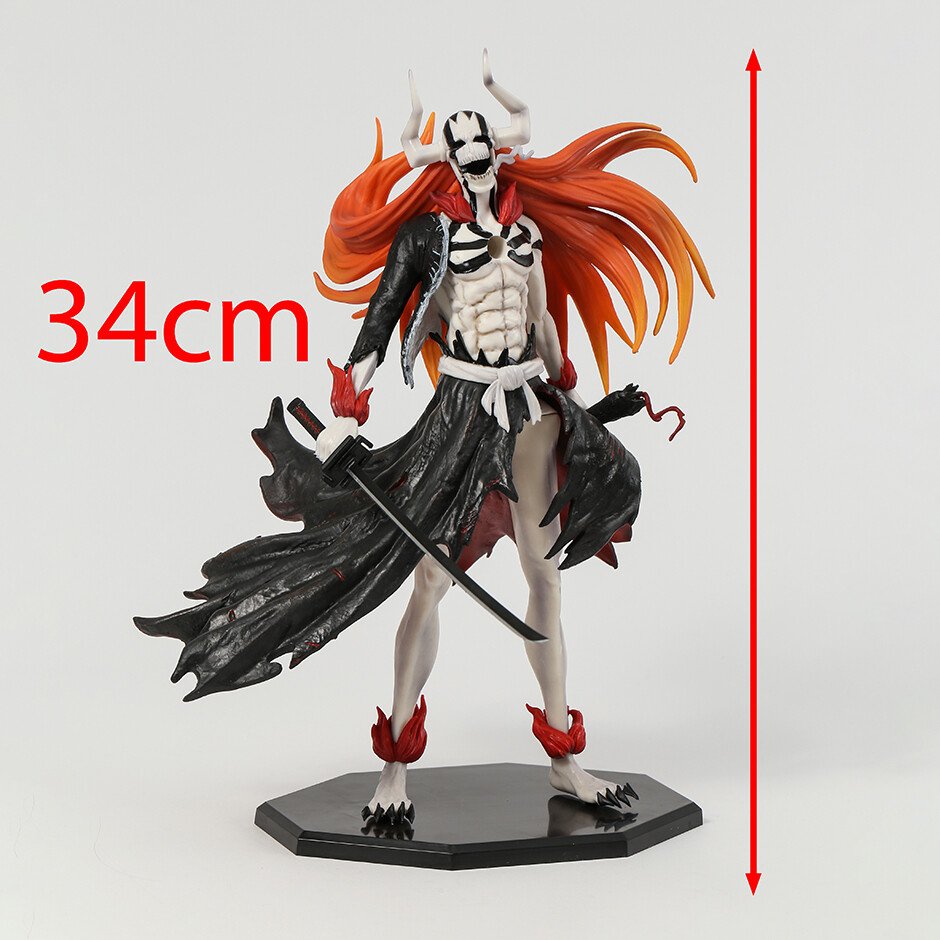
In Episodes 271 and 272, Ichigo transforms into a full-blown Vasto Lorde-like Hollow. This isn't just a mask; it's a complete physical metamorphosis into a monstrous, horned, white-bodied being with immense spiritual pressure and regenerative abilities. This form is utterly devoid of Ichigo’s consciousness, operating purely on instinct, driven by an overwhelming urge to destroy Ulquiorra. The power displayed is staggering, easily surpassing Ulquiorra’s released form. However, this power comes with a terrifying cost: complete loss of self. This transformation is a pivotal moment, showcasing the devastating potential and moral dilemma of Ichigo’s Hollow side. It’s a moment that raises profound questions about the nature of power and the sacrifices made for victory. This event profoundly shaped the profound impact of Hollow Ichigo on his journey.
The True Zangetsu: Integration, Not Suppression
After the defeat of Aizen, Ichigo’s powers dwindle, leading him into the Fullbring arc where he regains them in a new way. However, it's the Quincy Blood War arc that fundamentally redefines Ichigo’s relationship with his inner Hollow, revealing a truth far deeper than anyone anticipated.
Old Man Zangetsu's Revelation: A Father's Protection
For the longest time, Ichigo believed "Old Man Zangetsu" was his Zanpakutō spirit. The Quincy Blood War arc shatters this perception, revealing that the old man was, in fact, the manifestation of Ichigo's Quincy powers, actively suppressing his true Shinigami/Hollow powers out of a desire to protect him from the harsh realities of being a Soul Reaper.
It's revealed that the Hollow Ichigo, the very entity Ichigo fought to control, was his true Shinigami power, a fusion of his Hollow and Shinigami essence. This revelation fundamentally changes everything. Hollow Ichigo wasn't an invasive monster; he was the very core of Ichigo's Soul Reaper abilities, distorted by a misunderstanding of his hybrid nature. This recontextualizes all previous battles where Hollow Ichigo appeared; he wasn’t trying to take over Ichigo, but to lend him his true power, albeit in a raw and uncontrolled manner because Ichigo himself couldn’t grasp it.
Merged Tensa Zangetsu: Harmony Achieved
With this newfound understanding, Ichigo's Zanpakutō takes on a new form: two blades, representing the harmonious integration of his Quincy (the larger, outer blade) and Shinigami/Hollow (the smaller, inner blade) powers. This isn't just a cosmetic change; it symbolizes Ichigo’s complete acceptance and mastery of all facets of his being.
From this point onward, Hollow Ichigo no longer needs to manifest separately or take over. His power is now fully integrated into Ichigo’s own, meaning every subsequent act of overwhelming power is, in essence, an expression of his Hollow-infused Shinigami abilities, wielded with full conscious control. The struggle is over; harmony is achieved. This represents the ultimate evolution of Ichigo the Hollow's journey.
The Mechanics of Manifestation: Why and How
Hollow Ichigo's appearances aren't random; they follow a pattern deeply tied to Ichigo's psychological state and the demands of battle. Understanding these triggers offers insight into his development.
- Desperation and Near-Death Experiences: By far the most common trigger. When Ichigo is on the brink of death, or when those he cares about are in extreme danger, his inner Hollow often surges forward as a last-ditch survival mechanism. The fight against Byakuya (Episode 59) and the Ulquiorra battle (Episode 271) are prime examples.
- Loss of Control and Emotional Turmoil: Intense fear, rage, or despair can weaken Ichigo's mental defenses, allowing the Hollow to assert dominance. The early takeovers often occurred when Ichigo's emotions were at their peak.
- Conscious Activation (Mask): After training with the Visored, Ichigo gains the ability to consciously summon his Hollow mask, providing a temporary but significant power boost. This represents a step towards mastery, even if still limited.
- Internal Struggle for Dominance: During training, particularly with Urahara and the Visored, Hollow Ichigo manifests within Ichigo's inner world, forcing him to fight for control and integration of his powers.
- The Will to Protect: At its core, Hollow Ichigo often surfaces when Ichigo's deepest desire to protect his friends and family is threatened, becoming a dark guardian when all else fails.
Beyond the Mask: Hollow Ichigo's Enduring Legacy
Hollow Ichigo is more than just a power-up. He is a character, a symbol, and a crucial component of Ichigo's identity. His presence forces Ichigo—and the audience—to confront difficult questions: What is the nature of power? Can one wield darkness without becoming dark? How much of oneself is one willing to sacrifice for victory?
His cynical, sadistic, yet sometimes protective personality added a complex layer to Ichigo's inner world, often acting as a distorted mirror reflecting Ichigo's own hidden anxieties and suppressed rage. The internal dialogue and battles between Ichigo and his Hollow self were often as compelling as any external conflict, providing deep psychological insight into the protagonist.
Ultimately, Hollow Ichigo's journey mirrors Ichigo's own: from a feared, uncontrollable entity to a fully integrated and understood aspect of his true strength. This evolution from suppression to acceptance is a powerful narrative thread that elevates Bleach beyond a simple action series, embedding it with themes of self-discovery and the complexities of identity.
Common Misconceptions & Lingering Questions
"Is Hollow Ichigo just a villain?"
No, not purely. While he is antagonistic towards Ichigo and possesses violent tendencies, he is ultimately a part of Ichigo's soul. His actions, even when seemingly malicious, often serve to push Ichigo to become stronger or protect him in moments of extreme peril. He represents Ichigo's primal survival instinct and the raw power Ichigo needed to survive his harshest battles.
"Why does he look like Zangetsu?"
This is a major reveal in the Quincy Blood War arc. Hollow Ichigo is Ichigo's true Zanpakutō spirit, a fusion of his Shinigami and Hollow powers. The "Zangetsu" Ichigo knew for most of the series was actually the manifestation of his Quincy powers, which was suppressing his true Shinigami/Hollow abilities to protect him. Once Ichigo understands and accepts his full heritage, the "Hollow Ichigo" persona fully merges into his true Zangetsu.
"Is the Vasto Lorde form something Ichigo can control now?"
The Vasto Lorde form seen against Ulquiorra was an involuntary, berserk state where Ichigo completely lost consciousness. After the Quincy Blood War, with his powers fully integrated, Ichigo doesn't need to revert to that form. Instead, his full power, including his Hollow essence, is part of his Bankai and Shinigami abilities, wielded consciously and harmoniously. He's no longer a host to a separate entity but a complete master of his combined heritage.
"Did Hollow Ichigo ever truly disappear?"
Not disappear, but rather integrate. The "Hollow Ichigo" as a separate, adversarial consciousness within his inner world ceased to exist once Ichigo fully understood and accepted that his Hollow power was his true Shinigami power, and that "Old Man Zangetsu" was his Quincy power. They both became integral parts of his single, unified Zanpakutō and his being.
Beyond the Fights: Embracing the Whole Self
The key battles and pivotal moments featuring Hollow Ichigo are not just spectacles of power; they are profound lessons in self-acceptance. Ichigo’s journey with his inner Hollow teaches us that our perceived weaknesses or darkest impulses can, in fact, be sources of immense strength if acknowledged and integrated rather than suppressed. He transforms from a young man terrified of the monster within to a seasoned warrior who understands that the "monster" is, in fact, an essential and powerful part of who he is.
For anyone charting Ichigo's growth, these encounters are indispensable viewing. They chronicle not just the evolution of a fighter, but the maturation of a character who learns to embrace every facet of his extraordinary, multifaceted existence. It’s a powerful narrative about finding strength in authenticity, even when that authenticity is terrifyingly raw and profoundly complex.