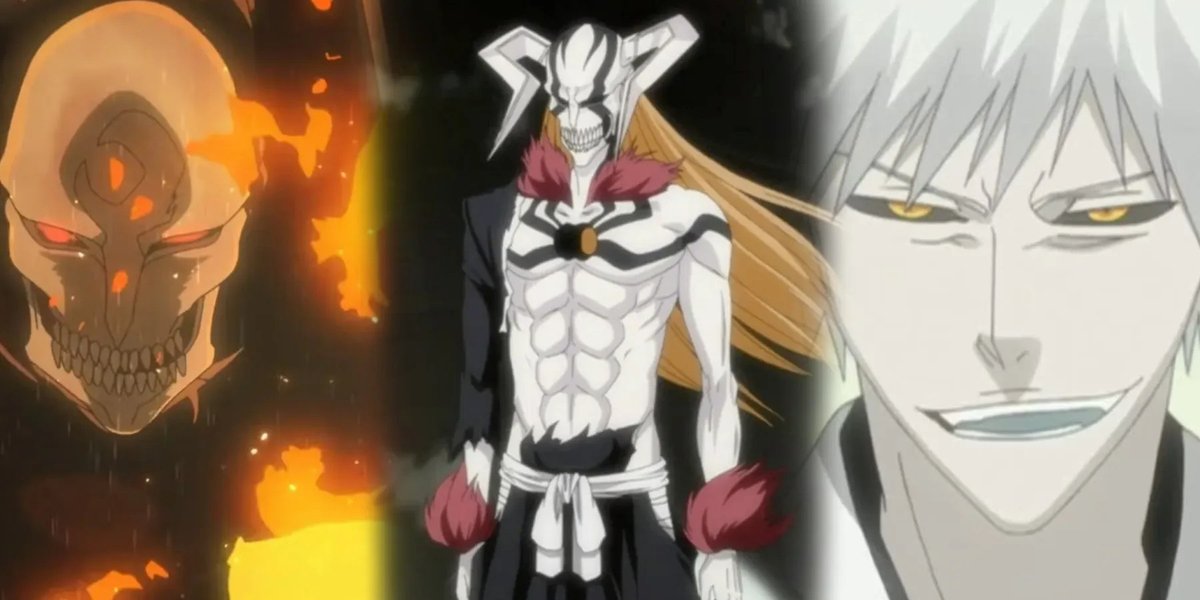
Ever found yourself re-reading panels, scratching your head, and wondering about the true identity of Ichigo Kurosaki's powers? You're not alone. The journey into Ichigo's Inner World: The Dynamics of Zangetsu and His Hollow is arguably one of the most compelling and mind-bending narratives in Bleach. What began as a seemingly straightforward relationship with his Zanpakutō spirit, "Old Man Zangetsu," eventually unraveled into a complex tapestry of Quincy heritage, Shinigami power, and terrifying Hollow instincts. This isn't just a plot twist; it's a fundamental redefinition of Ichigo's very being and the source of his immense strength.
At a Glance: Ichigo's Inner World Unpacked
- Dual Zangetsu Identities: "Old Man Zangetsu" is the manifestation of Ichigo's Quincy powers (a younger Yhwach), while his inner Hollow, "Hichigo" or "White," is the true essence of his Shinigami/Hollow Zanpakutō.
- The Quincy's Veil: Old Man Zangetsu suppressed Ichigo's true Shinigami/Hollow powers, acting as a protective but deceptive gatekeeper, shaping his abilities and Bankai.
- Hollow as Zanpakutō: Hichigo is the real Zangetsu, born from Masaki Kurosaki's Hollowfication and fused with Ichigo's Shinigami powers from birth.
- Bankai's Twisted Reflection: Ichigo's original Bankai (Tensa Zangetsu) reflected Old Man Zangetsu's form because of Ichigo's belief and Bachgetsu's dominance over the power flow.
- A Protective Lie: Old Man Zangetsu's deception was born of a desire to protect Ichigo, restraining the powers that Yhwach himself feared.
- True Power Unleashed: The ultimate revelation allowed Ichigo to integrate all his powers, unlocking his full potential and the true form of his Zanpakutō.
The Man Behind the Scythe: Deconstructing Old Man Zangetsu
For years, we, alongside Ichigo, believed Old Man Zangetsu—the cloaked, somber figure wielding a massive cleaver—was the very embodiment of his Zanpakutō. He was the stern mentor, the source of Ichigo's spiritual wisdom, and the face of his Shinigami powers. He taught Ichigo how to use Getsuga Tenshou, helped him achieve Bankai, and even imparted the devastating secrets of the Final Getsuga Tenshou.
But the truth, as revealed much later by the eccentric Ouetsu Nimaiya, shattered this perception. Old Man Zangetsu was never Ichigo's true Shinigami Zanpakutō spirit. Instead, he was the personification of Ichigo's Quincy powers, specifically a younger version of Yhwach, the Quincy King. This revelation sent shockwaves through the fandom, forcing a complete re-evaluation of Ichigo's entire journey and the source of his abilities.
This isn't merely a semantic twist; it fundamentally alters our understanding of the very nature of a Zanpakutō in Ichigo's unique case. Unlike other Shinigami whose Zanpakutō spirits are extensions of their own souls, Ichigo’s was far more complicated, rooted in a triple-hybrid heritage.
The Quincy's Hand: How Bachgetsu Held the Reins
If Old Man Zangetsu was Quincy, how did he manage to be so central to Ichigo's Shinigami development? The prevailing theory suggests that, as the dominant being in Ichigo's inner world, he exerted sovereign control over Ichigo's entire power set. From the moment Ichigo gained his Shinigami abilities, Bachgetsu acted as a filter, a regulator, and even an imposter "Asauchi"—the blank slate that forms the basis of a Zanpakutō.
This meant that Ichigo's true Shinigami and Hollow powers, embodied by White (Hichigo), were continuously suppressed. Bachgetsu wasn't malicious in the typical sense; he was fiercely protective. He didn't want Ichigo to fight, fearing the day he would have to use his full power, as it would inevitably lead to his demise or the awakening of something far more dangerous. He subtly blocked Ichigo from accessing his true power, forcing it to manifest through his own Quincy form.
This dynamic explains several long-standing mysteries:
- The Appearance of Bankai: Ichigo's original Bankai, Tensa Zangetsu, saw Old Man Zangetsu appear younger, mirroring Ichigo’s own transformed appearance. His Shihakushō, too, perfectly matched Bachgetsu's outfit. This wasn't a coincidence; Ichigo believed Old Man Zangetsu was his Zanpakutō, and Bachgetsu, holding the reins of power, twisted the manifestation to reflect his own Quincy form and Ichigo's perception.
- Knowledge of Final Getsuga Tenshou (FGT): How could Bachgetsu know about the FGT if he was separate from the true Zanpakutō spirit? This likely stems from his initial dominance. As the primary gatekeeper, he had access to the full scope of Ichigo's potential, including the self-sacrificing technique that embodied the ultimate release of all Ichigo's powers.
- The Purpose of the Deception: The narrative purpose of this revelation is profound. It deepens Ichigo's connection to Yhwach, hinting at a "Harry Potter"-like plot device where their very essence is linked. It also allowed for a significant power-up and design change, as Ichigo finally unlocked his true, fused Zanpakutō.
The True Zangetsu: Enter the Inner Hollow, White
If Old Man Zangetsu was a Quincy, then who was the Shinigami Zanpakutō? The answer is both terrifying and exhilarating: Ichigo's inner Hollow, often affectionately (or fearfully) called Hichigo or White. This monstrous, sadistic entity, which has plagued Ichigo since his earliest battles, isn't a separate threat but rather the genuine manifestation of his Zanpakutō's soul.
White isn't just a Hollow; he is the Hollow that infected Ichigo's mother, Masaki, and subsequently fused with Ichigo's nascent Shinigami powers from the moment of his conception. He is the inherited legacy of Masaki's Hollowfication and Isshin's Shinigami Reiatsu. This fusion, combined with Ichigo's Quincy heritage, made him a truly unique being—a Shinigami-Hollow-Quincy hybrid. For a deeper dive into the origin of his Hollow powers, learn more about Ichigo the Hollow.
The Silent Partner: Why Hichigo Didn't Object
One of the most perplexing questions is why Hichigo didn't reveal Bachgetsu's true nature earlier or object to his usurpation of power. There are a few compelling theories:
- Shared Origin, Divided Control: Initially, Hollow Ichigo and Old Man Zangetsu might have been "one being," the primordial source of Ichigo's power, albeit with Bachgetsu taking the lead. As Ichigo grew, so did the distinct personalities and powers within him.
- The Usurper's Intent: Hollow Ichigo always sought to gain control over Ichigo himself. Perhaps he wasn't offended by Bachgetsu's control because he saw it as a temporary measure, a stepping stone. He knew his true power would eventually surface, and he could then take over. His constant challenges to Ichigo were always about sovereignty, not just a desire for chaos.
- Growth and Sovereignty Transfer: As Ichigo faced increasingly powerful foes, particularly during his final battle with Byakuya, Hollow Ichigo's strength grew. It was during this period that he first usurped control and used Bankai, demonstrating a transfer of sovereignty as his power became undeniable, pushing past Bachgetsu's suppression.
The Dangai Training: A Glimpse Behind the Veil
The training in the Dangai, where Ichigo learned the Final Getsuga Tenshou, offers crucial insights into this dynamic. During this intense period, Hichigo was explicitly extracted from Ichigo's chest, not the manifestation of Tensa Zangetsu as we knew it. This highlighted that Hichigo was the essence of his power.
Both Tensa Zangetsu (the youthful Bachgetsu) and Hichigo appeared in Bankai form. This wasn't a contradiction but a representation of the fused power that Bachgetsu had been channeling. It showed that even with the Quincy powers dormant in the background, they were intrinsically linked to the Shinigami/Hollow manifestation. This also reinforces the idea that Ichigo's belief and Bachgetsu's initial dominance dictated the visual representation of his powers, even if the underlying spirit was White.
The Quincy's Protection: Bachgetsu's True Agenda
It's tempting to view Old Man Zangetsu's actions as pure deception, but a more nuanced understanding reveals a protective instinct. As a sentient, personified Quincy Power, he genuinely cared for Ichigo. He was, in essence, trying to save Ichigo from the fate of all Quincies, which was to eventually merge back with Yhwach. By suppressing Ichigo's power, he tried to prevent Ichigo from engaging in battles that would inevitably push him to his limits, awakening the very powers Yhwach sought.
Some theories suggest Bachgetsu wasn't under Yhwach's direct control but was influenced by Isshin's Reiatsu, creating a unique, sympathetic entity. His appearance, mirroring Yhwach from 1000 years ago, and Whitey's specific targeting of a Quincy (Masaki) when he first appeared, further support this singular connection.
This isn't about Bachgetsu being a "bad guy"; it's about him making choices he believed were best for Ichigo, even if they involved hiding the truth and restricting his potential. It adds a layer of tragic heroism to a character who was initially seen as a simple mentor.
Recontextualizing Ichigo's Power: A Framework for Understanding
Understanding Ichigo's inner world requires a new framework, one that acknowledges his unique hybrid nature.
The Three Pillars of Ichigo's Strength
- Shinigami Power (White/Hichigo): This is his true Zanpakutō spirit, born from Masaki's Hollowfication and his inherited Shinigami abilities. It’s wild, instinctual, and the core of his destructive potential. To better understand the intricacies of Hollow powers and their role in Shinigami abilities, further research can be highly enlightening.
- Quincy Power (Old Man Zangetsu/Bachgetsu): This is the inherited power from his mother, a manifestation of Yhwach within him. It was protective, manipulative, and acted as a conduit/regulator for his other powers, shaping their form and release. You can delve deeper into Quincy abilities to appreciate the raw power behind this manifestation.
- Human Soul (Ichigo Kurosaki): The unifying force. Ichigo's strong will and desire to protect are what allowed these disparate, conflicting powers to coexist and eventually merge. His resolve prevented him from being consumed by his inner Hollow or completely dominated by his Quincy heritage.
Power Triggers and Suppressions
Ichigo's power didn't simply "turn on." It required external stimuli and internal struggle:
- Rukia's Stab: The initial awakening of his Shinigami powers, acting as a "jump-start" when his innate abilities were dormant due to Isshin's Reiatsu link.
- Opie's Reiatsu (Blut Vene): Contact with other Quincy Reiatsu triggered his latent Quincy abilities, like Blut Vene, even when he wasn't consciously aware of them.
- Isshin's Reiatsu Link: Isshin, as a powerful Shinigami, maintained a Reiatsu link with Ichigo for years, which likely suppressed Ichigo's fused Shinigami/Hollow powers, preventing earlier contact with his true Zanpakutō spirit. This was a protective measure, preventing the White Hollow from manifesting too early and uncontrollably.
The "Asauchi" Conundrum
Ouetsu Nimaiya, the creator of all Zanpakutō, revealed that an Asauchi is essentially a blank Shinigami soul that a Shinigami imprints their essence upon to create their unique Zanpakutō. Ichigo never had a traditional Asauchi. His "Asauchi" was effectively his inner Hollow, White, fused with his inherited Shinigami power from birth. Bachgetsu then usurped control, acting as the superficial Asauchi, shaping the power's outward appearance and function until Ichigo could face his true self.
This clarifies how White, the true Zangetsu, could grow stronger to surpass Bachgetsu. While Bachgetsu initially held sovereign control over the flow of power, the source of the Shinigami and Hollow power was always White. As Ichigo fought, his spiritual pressure grew, and this growth directly fueled White, allowing him to eventually break free of Bachgetsu's dominance and manifest his true form.
Common Misconceptions and Lingering Questions
Despite the revelations, certain aspects of Ichigo's inner world continue to spark debate:
- Is "Retdis" necessary? Some fans use terms like "retdis" (retroactive discontinuity) to describe how these revelations seemingly break established canon. However, it's more accurately a "retcon" (retroactive continuity) that adds complexity and depth rather than erasing past events. The story of Ichigo's power in the early arcs remains the same; our understanding of its underlying mechanics simply evolves.
- Quincy Spirits: A Broader Implication? Does Ichigo's case imply that all Gemischt (mixed-blood) Quincy have an inner "Quincy Cross spirit" they train to use powers, while Echt (pure-blood) Quincy are their inner Quincy spirit? This is a fascinating extrapolation. While the narrative focuses on Ichigo's unique circumstances, it certainly opens the door to such interpretations, suggesting a deeper, internal struggle for all Quincy.
- The Depth of Bachgetsu's Consciousness: Was Bachgetsu truly sympathetic and independent, or was he merely a manifestation of Yhwach's will operating on an unconscious, self-preservation level? The portrayal leans towards genuine care, but the underlying connection to Yhwach makes it an intriguing point of discussion. His "1000 years ago" appearance implies a fundamental, almost archetypal, connection to the Quincy progenitor's prime.
Embracing the Complexity: Ichigo's Path to True Power
The journey through Ichigo's inner world, understanding the intricate dance between Zangetsu (White) and his Quincy powers (Bachgetsu), is a testament to Bleach's layered storytelling. It transforms a seemingly simple protagonist into a multi-faceted being, burdened and blessed by his unique heritage.
The narrative choice to reveal Old Man Zangetsu's true identity was more than just a twist; it was a necessary step for Ichigo to truly understand and harness his full power. Before this revelation, Ichigo was fighting with a hand tied behind his back, his powers filtered and suppressed by a well-meaning but ultimately limiting entity.
By confronting and integrating his Quincy heritage with his Shinigami-Hollow true Zanpakutō, Ichigo didn't just get stronger; he became whole. He understood that his strength wasn't just about raw power but about accepting every part of himself—the Shinigami, the Hollow, and the Quincy. It's a powerful metaphor for self-acceptance and the realization that true power often lies in embracing our complete, complex identities, even the parts that scare us or seem contradictory. It's only then that one can truly tap into the true implications of the Final Getsuga Tenshou and beyond.